

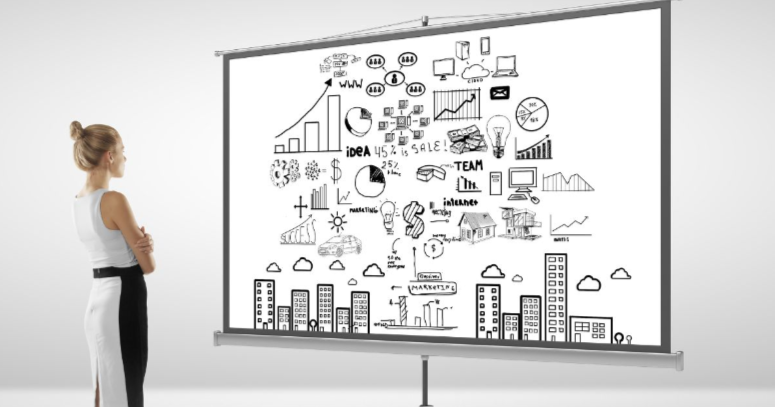
Many teams face challenges that require clear communication, creative thinking, and strong cooperation. This is where graphic facilitation becomes valuable. Graphic facilitation is a method that uses simple drawings, symbols, words, and diagrams to help people share ideas, understand information, and work together more effectively. By turning conversations into visual content, teams can better understand complex topics, stay focused on goals, and make decisions with greater confidence and for this many businesses turn to ImageThink.
Understanding Graphic Facilitation and Why It Matters
What Is Graphic Facilitation?
Graphic facilitation is the practice of using visual elements to support discussions, meetings, workshops, and presentations. Instead of relying only on spoken words or long written notes, facilitators use drawings, icons, charts, and diagrams to capture ideas as they are discussed.
The goal is to make information easier to understand and remember. When participants can see ideas displayed visually, they are more likely to stay engaged and contribute to the conversation. Graphic facilitation creates a shared picture of what the group is discussing, helping everyone move in the same direction.
The Purpose of Visual Communication
People often assume that others understand their thoughts exactly as they do. In reality, every person sees situations differently based on their experiences and knowledge. Visual communication helps bridge these differences.
By drawing ideas and concepts, teams can clearly see what is being discussed. Participants can point to a visual, ask questions, suggest changes, and build on ideas together. This process reduces confusion and helps create a stronger shared understanding among team members.
A Brief Look at Its History
The use of drawings to communicate ideas is not new. Humans have been using pictures and symbols for thousands of years, from ancient cave paintings to maps and diagrams. However, graphic facilitation became more widely recognized during the 1970s and 1980s when organizations began searching for better ways to support collaboration and innovation.
One of the most influential figures in this field is David Sibbet, who helped develop visual methods for group discussions, strategic planning, and problem-solving. His work showed that visual thinking could help teams tackle difficult challenges more effectively.
Today, this method is used in businesses, schools, government agencies, non-profit organizations, and many other settings around the world.
Why Visual Learning Works
The human brain naturally responds well to visual information. Images help us recognize patterns, connect ideas, and remember information more easily. Combining words with drawings creates a stronger learning experience than words alone.
Visuals also help people see relationships between ideas. For example, a simple diagram can show how different tasks connect, how a process flows, or how a problem affects multiple areas of a project. This makes it easier for groups to understand the bigger picture while still focusing on important details.
Practical Ways to Use Graphic Facilitation
Building Basic Graphic Facilitation Skills
Many people believe they cannot draw, but graphic facilitation does not require artistic talent. The focus is on communication rather than creating perfect artwork. Most visuals are built using simple shapes such as circles, squares, lines, and arrows.
Anyone can learn the basics through regular practice. As confidence grows, people become more comfortable using visuals during meetings, workshops, and planning sessions.
Some of the most important visual elements include:
- Frames for organizing information
- Simple people drawings to represent individuals or groups
- Places and locations
- Process diagrams
- Communication symbols
- Clear and readable text
- Effects such as arrows, highlights, and emphasis marks
These basic elements can be combined to create powerful visual tools for communication.
Using Visual Presentations
Visual presentations are a great alternative to traditional slide presentations. Instead of showing information one slide at a time, facilitators create large visual displays that remain visible throughout the discussion.
These presentations often combine drawings, keywords, and diagrams to explain important concepts. Because all the information remains visible, participants can easily connect ideas and follow the overall story being presented.
Visual presentations are especially useful when explaining new strategies, introducing complex topics, or presenting information that people need to remember long after the meeting ends.
Encouraging Participation with Visual Templates
Visual templates are designed to encourage active involvement. They include questions, diagrams, or empty spaces where participants can add ideas, feedback, and suggestions.
Rather than listening passively, participants become contributors. This creates a more engaging environment and helps people feel that their opinions matter.
Visual templates can be used for brainstorming sessions, project planning, problem-solving workshops, team-building activities, and strategy discussions. They provide structure while still allowing creativity and open discussion.
Graphic Facilitation for Online Meetings
As remote work becomes more common, graphic facilitation has also moved into virtual spaces. Digital collaboration tools allow facilitators to create visual discussions online, making remote meetings more interactive and productive.
When working online, simplicity becomes even more important. Clear visuals, larger text, and uncluttered designs help participants stay focused and avoid confusion.
Digital whiteboards allow participants to contribute ideas in real time, making online collaboration feel more engaging and connected. Whether a meeting takes place in person or online, the principles of graphic facilitation remain the same: create clarity, encourage participation, and support collaboration.
Considering Cultural Differences
When working with international teams, it is important to recognize that symbols and colors may have different meanings across cultures. A gesture or color that seems positive in one place may have a different meaning elsewhere.
To avoid misunderstandings, facilitators should use simple and widely recognized symbols whenever possible. Common shapes, arrows, and universal icons are often the safest choices when working with diverse groups.
Being aware of cultural differences helps create an environment where everyone feels comfortable and included.
Is Graphic Facilitation Professional?
Some people worry that using drawings at work may seem childish or unprofessional. However, experience shows the opposite. Visual tools help people understand information more quickly and solve problems more effectively.
Leaders, managers, consultants, and executives often use graphic facilitation because it simplifies complex discussions and helps teams work together. The more complicated the topic, the more valuable visual support becomes.
Conclusion
Graphic facilitation is a practical and effective way to improve communication, teamwork, and problem-solving. By combining words with simple visuals, groups can create greater understanding, encourage participation, and make complex information easier to manage.
Whether used in meetings, workshops, presentations, or online collaboration, graphic facilitation helps people connect ideas, share perspectives, and work toward common goals. As challenges become more complex, visual methods like this remain an important tool for clear communication and successful collaboration.