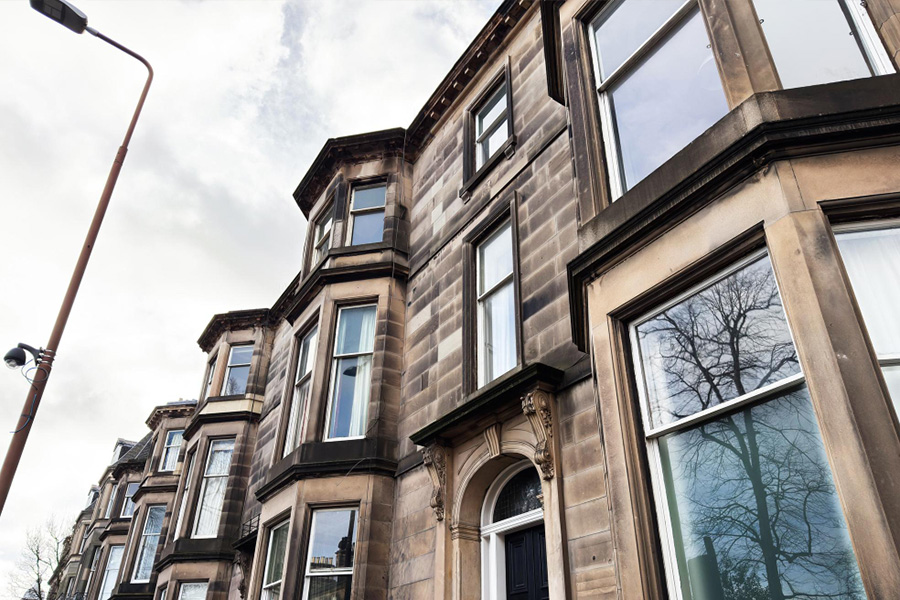
Walk down any residential street in Britain and you will notice something interesting. Some houses seem to have a pull to them — a sense of being well looked after, considered, finished. Others, regardless of how tidy the garden or how recently the walls were painted, feel somehow incomplete. More often than not, the difference comes down to the windows and doors.
It sounds like a small thing. But these are the frames through which everything else is viewed, quite literally, and their colour, condition, and finish have an outsized effect on how a property reads from the outside.
The Default White Problem
White uPVC was the go-to choice for decades, and for understandable reasons. It was affordable, widely available, and neutral enough to offend nobody. Millions of homes across the UK had white frames installed during the big double glazing boom of the 1980s and 1990s, and many of those frames are still in place today.
The problem is not the material itself, which remains perfectly functional in most cases. The problem is what white uPVC does to a property over time. It yellows. It picks up grime. And even when clean, it can flatten a facade and make a home look generic at a time when homeowners are more design-conscious than ever.
The good news is that replacement is not the only option. A specialist colour coating applied directly to existing frames can completely transform the appearance of uPVC windows and doors without the disruption, waste, or cost of a full installation. It is a solution that has grown considerably in popularity over the past decade as more homeowners have discovered just how significant the results can be.
Colour Trends Worth Knowing About
If you are considering a change, it helps to know what is working well on properties similar to yours.
Anthracite grey became the dominant trend in the 2010s and shows no sign of going anywhere. It suits contemporary new builds particularly well, lending a clean, architectural feel that works with composite doors, aluminium-look fascias, and pared-back landscaping. On the right property, it looks genuinely premium.
Green has had a strong resurgence. Sage, olive, and forest shades have all found favour on period properties and rural homes, sitting naturally against brick and stone in a way that feels rooted rather than imposed. Racing green in particular has become something of a statement choice for Victorian and Edwardian terraces, especially when paired with brass or black hardware.
Cream and off-white tones offer a middle path for those who want warmth without committing to a bold colour. On cottages, older farmhouses, and rendered properties, they can look far more considered than stark white while remaining understated.
Black remains a bolder option but is increasingly seen on properties where the owners want real kerb appeal impact. It works best when used consistently across all openings and supported by the right door style and surrounding detail.
Thinking Beyond The Door
Front doors understandably get most of the attention in conversations about exterior colour, and a well-chosen door colour can absolutely anchor a scheme. But windows are the larger surface area, and it is the combination of the two that creates the overall impression.
When planning a colour update, think about the whole picture. Guttering, fascias, soffits, and any external joinery all contribute to the finished look. A beautifully coloured front door surrounded by tired, mismatched trims will always fall short of its potential.
It is also worth considering how your chosen colour will read in different light conditions. The British climate means your home will be seen in flat grey light as often as warm sunshine, and some colours that look wonderful in a showroom or on a screen can shift considerably in overcast northern light. If possible, obtain a sample or ask a specialist to show you reference projects in similar settings.
Conservation Areas And Planning Considerations
If your property sits in a conservation area, is listed, or is part of a development with restrictive covenants, it is worth doing your homework before committing to a colour change. Some local planning authorities have guidance on acceptable window and door colours for street-facing elevations, particularly in areas with strong architectural character.
This is not necessarily a barrier. Many heritage shades are perfectly acceptable and may actually be encouraged in areas where white uPVC is considered out of keeping with the surroundings. A conversation with your local authority or a specialist with experience in conservation work can clarify the position quickly.
Getting The Finish Right
Whatever colour you choose, the quality of the finish matters enormously. A poorly applied coating will peel, fade unevenly, or show brush marks, and a bad result is harder to live with than the original problem.
Look for specialists who prepare surfaces properly before coating, use materials suited to exterior uPVC, and offer a workmanship guarantee. Ask to see completed projects, ideally ones that have been in place for a few years rather than freshly finished. Longevity and real-world performance are what you are really assessing.
Maintained correctly, a quality coating should give many years of service. Gentle cleaning with a mild detergent a couple of times a year is usually sufficient to keep the finish looking its best.
A Relatively Simple Upgrade With A Disproportionate Impact
Exterior renovation does not always require significant structural work or large budgets. Sometimes the most effective improvements are the ones that address what people actually see first.
Updating the colour of your windows and doors is one of those improvements. Done well, it can lift the entire appearance of a property, increase kerb appeal, and give a home a sense of intention that white uPVC frames, however functional, rarely manage to convey on their own.